Vertigo, Dizziness or Feeling Off Balance?
“Dizziness” can mean spinning, lightheadedness, unsteadiness, or motion sensitivity. Those sensations can have very different causes, so the first step is identifying what you actually feel.
Dr. Richard Collin evaluates dizziness that may overlap with neck pain, restricted movement, or injury and explains when vestibular, medical, neurological, or other referral makes more sense.
Does This Sound Like You?

The exact sensation, trigger, and duration can provide important clues about what may be happening.
More dizziness and balance symptoms
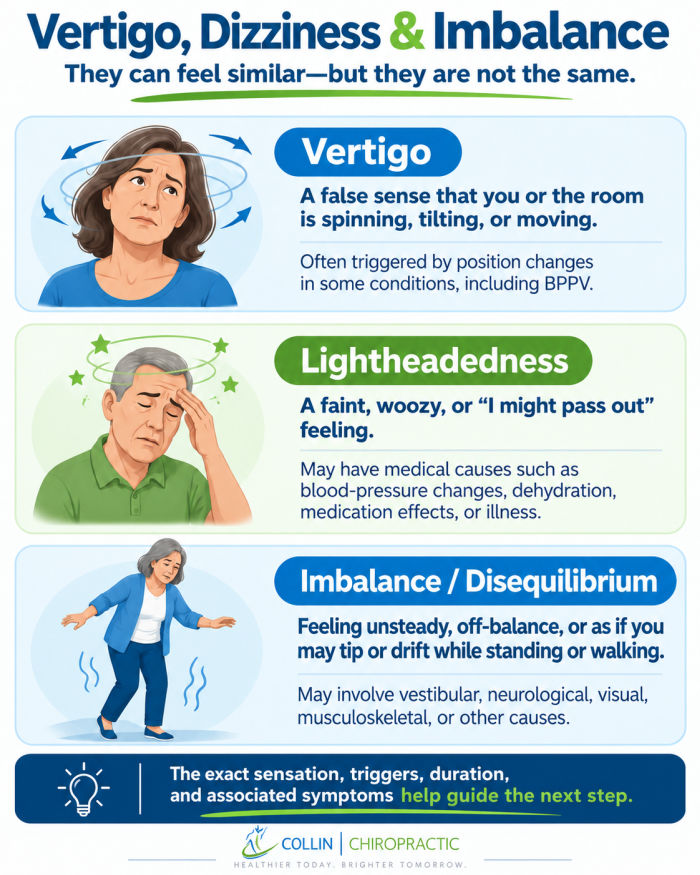
Understanding Vertigo, Dizziness and Imbalance
People often use the word “dizzy” for several different sensations. This visual shows why describing the feeling itself matters.
What Can Cause Vertigo or Dizziness?
Vertigo is a symptom, not one diagnosis. Triggers, duration, associated symptoms, and injury history help guide the next step.
BPPV & Positional Vertigo
Benign paroxysmal positional vertigo (BPPV) is a common peripheral vestibular disorder involving displaced inner-ear crystals called otoconia. Head-position changes often trigger brief spinning.
Vestibular Migraine
Vestibular migraine may cause vertigo, motion sensitivity, nausea, or disequilibrium with or without a typical migraine headache.
Cervicogenic Dizziness
Cervicogenic dizziness may be considered when dizziness occurs with cervicalgia, restricted neck movement, or neck injury after other important causes have been considered.
Post-Traumatic Dizziness
Post-traumatic dizziness after whiplash, concussion, or head and neck trauma can have vestibular, neurological, or musculoskeletal contributors.
Other Vestibular Disorders
Vestibular neuritis, labyrinthitis, Ménière disease, and other inner-ear disorders may require ENT, audiology, or vestibular evaluation.
Medical or Medication Causes
Orthostatic blood-pressure changes, medication effects, illness, cardiovascular problems, and neurological conditions may cause dizziness or lightheadedness.
How Dr. Collin Evaluates Dizziness
The goal is to characterize the pattern, look for relevant musculoskeletal findings, and recognize when another type of evaluation should come first.

What the evaluation may include
When Chiropractic Care May Be Appropriate

Some dizziness patterns require vestibular or medical care rather than chiropractic treatment.
Chiropractic care is not the right treatment for every cause of vertigo or dizziness. When findings suggest a relevant cervical musculoskeletal component, conservative care may be considered after more concerning causes have been addressed.
More about our approach
Care may include gentle cervical or upper-back treatment, mobility guidance, posture support, or home recommendations. Suspected BPPV, vestibular migraine, inner-ear disease, neurological findings, or other medical causes may require referral.
While You’re Feeling Dizzy
Sit Down When Symptoms Start
If spinning or unsteadiness begins suddenly, sit or lie down somewhere safe rather than trying to push through it.
Move Carefully
Rise slowly, use handrails, keep walkways clear, and ask for help if you feel at risk of falling.
Don’t Drive While Dizzy
Wait until you feel steady and safe before driving or using equipment that requires quick reactions and reliable balance.
When Dizziness Needs Urgent Medical Attention
Seek emergency medical care for new severe dizziness with facial drooping, trouble speaking, new weakness or numbness, double vision, a sudden severe headache, fainting, chest pain, major loss of coordination, new inability to walk safely, or symptoms after serious head trauma.
Related Conditions & Care
Dizziness may occur alongside neck pain, migraine, nerve symptoms, whiplash, or other injuries.
New to the office? View New Patient Information
Vertigo & Dizziness FAQ
What gets mistaken for vertigo?
Lightheadedness, feeling faint, disequilibrium, motion sensitivity, medication effects, blood-pressure changes, migraine, and other conditions may all be called “dizziness” without being true vertigo.
What is the #1 cause of vertigo?
Benign paroxysmal positional vertigo (BPPV) is the most common cause of vertigo in adults. It typically causes brief spinning episodes after changes in head position, such as rolling over in bed or looking upward.
Can the Epley maneuver help vertigo?
The Epley maneuver is a canalith-repositioning technique commonly used for certain forms of BPPV. It is not appropriate for every type of dizziness or vertigo, so proper assessment matters before deciding whether a repositioning maneuver, another treatment, or referral is appropriate.
Can neck problems cause dizziness?
Cervicogenic dizziness may be considered when dizziness occurs with neck pain, limited movement, or after whiplash, but other important causes should be considered first.
Can a chiropractor help with vertigo or dizziness?
It depends on the cause. Chiropractic care may fit some cervical musculoskeletal presentations, while many causes require vestibular, ENT, neurological, or other medical evaluation.
Will I need an X-ray, MRI, or another referral?
Not every patient needs imaging. X-rays may sometimes help evaluate a related neck injury, while MRI or specialized vestibular testing may be ordered by an appropriate medical provider when the history or examination suggests the need.
When should I see an ENT, neurologist, or vestibular therapist?
Referral may be appropriate for suspected inner-ear disease, BPPV, vestibular migraine, hearing changes, persistent imbalance, neurological findings, or a pattern that does not fit a musculoskeletal cause.
Feeling Dizzy or Off Balance?
Dr. Collin will understand the symptom pattern, evaluate relevant findings, and explain whether chiropractic care or another type of evaluation makes more sense.
Location & Contact
4965 Lanier Islands Pky,
Suite 103
Buford, Georgia 30518
Call Today: 770-361-8225



Hours
Tues: 9 am - 1 pm
Saturday: 9 am - 12 pm
Call Today: 770-361-8225

"AWESOME, AWESOME, AWESOME! A for-sure place you want to check out for all your Chiropractic and Wellness needs. Would refer time and time again."
~Ashlea
Join us on Social for announcements, deals, health tips and latest products!
 |
 |