Headaches or Migraines?
Let’s Find Out Why.
Frequent headaches can interfere with work, sleep, exercise, family time, and everyday plans. Some headache patterns may involve neck tension or cervical musculoskeletal factors; others may be migraine or another medical condition.
Dr. Richard Collin takes time to listen, evaluate what may be contributing, and explain whether chiropractic care, imaging, referral, or another next step makes sense.

Does This Sound Like You?

Headaches can feel very different from person to person. The pattern, triggers, associated symptoms, and neck involvement can all provide useful clues.
More headache symptoms
Headache Patterns Aren’t All the Same
Similar symptoms can come from different headache disorders. The pattern helps guide the next step.
Tension-Type Headache
Often described as pressure or tightness and may occur with stress or muscle tension.
Cervicogenic Headache
A secondary headache attributed to a neck disorder, often with cervical pain or limited motion.
Migraine
A neurological headache disorder that may involve pain, nausea, sensory sensitivity, and sometimes aura.
Post-Traumatic Headache
Headache after whiplash, concussion, or another injury deserves careful evaluation.
Posture & Screen-Related Neck Tension
Prolonged computer or phone use may increase neck and upper-back tension in some people.
Upper Cervical & Occipital Pain
Upper cervical or occipital pain may overlap with some neck-related headache patterns.
What Does “Chronic Migraine” Mean?
Chronic migraine is defined as headache on 15 or more days per month for more than 3 months, with migraine features on at least 8 days per month. Diagnosis and medical management may require a primary care clinician, neurologist, or headache specialist.
How Dr. Collin Evaluates Headaches
The goal is not to assume the neck is responsible. It is to understand the headache pattern, screen for concerns, and determine whether cervical musculoskeletal findings may be relevant.

What the evaluation may include
Our Approach to Headache-Related Neck Symptoms
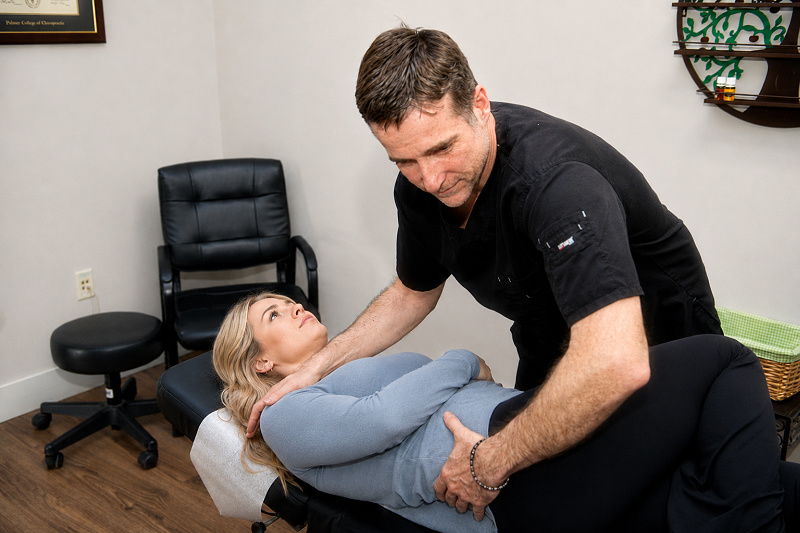
Chiropractic care may be considered when examination findings suggest a relevant cervical musculoskeletal component.
Chiropractic care is not appropriate for every headache, and migraine is not simply a neck problem.
More about our approach
When findings suggest cervicalgia, restricted neck movement, posture-related strain, or muscle tension, care may include adjustments, soft-tissue care, mobility guidance, posture support, or home exercises. Migraine, neurological symptoms, or other concerning findings may require medical evaluation instead.

Simple Things to Track Between Headaches
Give Your Neck a Break
If screen or desk work increases neck tension, change position periodically and use gentle movement.
Watch Common Triggers
Notice patterns involving hydration, meals, sleep, stress, jaw clenching, light, sound, or other triggers.
Keep a Short Headache Diary
Record headache days, duration, location, associated symptoms, triggers, and what helped.
Looking for simple mobility or posture guidance? Watch Chiropractic Exercise Videos
When a Headache May Need Urgent Medical Attention
Seek urgent or emergency medical care for a sudden severe or “worst” headache, new weakness or numbness, trouble speaking, confusion, loss of consciousness, seizure, fever with a stiff neck, significant vision changes, or headache after serious head trauma.
Related Conditions We Treat
Headaches may overlap with neck symptoms, whiplash, dizziness, nerve symptoms, disc problems, or injuries after a collision.
Looking for a broader overview? View Chiropractic Services · Personal Injury Care
Headaches & Migraines FAQ
Can a chiropractor help with headaches?
Chiropractic care may be appropriate when examination findings suggest a relevant cervical musculoskeletal component. It is not appropriate for every headache.
Should I keep a headache diary?
Yes. Tracking headache days, duration, associated symptoms, triggers, and what helped can make patterns easier to discuss during an evaluation.
Is migraine the same as a neck-related headache?
No. Migraine is a neurological headache disorder. Neck pain may occur during migraine without being its cause; cervicogenic headache is a different diagnosis attributed to a cervical source.
What is migraine with aura?
Migraine aura may include temporary visual, sensory, or speech/language symptoms. New or unusual neurological symptoms should be evaluated rather than assumed to be aura.
When should I see a medical doctor or neurologist for headaches?
Medical evaluation may be appropriate for suspected migraine, frequent or changing headaches, unusual neurological symptoms, or patterns that do not fit a musculoskeletal presentation.
Can posture or screen time contribute to headaches?
Prolonged posture may increase neck and upper-back tension in some people, but it does not explain every headache or migraine.
Will I need X-rays, an MRI, or another referral?
Not every patient needs imaging. The headache history, injury details, examination findings, and neurological symptoms help determine whether imaging or referral is appropriate.
Let’s Help You Get Back to Clearer, Better Days.
If headaches are recurring, changing, related to neck pain, or following an injury, Dr. Collin will listen, evaluate the pattern, and explain the next step.
Location & Contact
4965 Lanier Islands Pky,
Suite 103
Buford, Georgia 30518
Call Today: 770-361-8225



Hours
Tues: 9 am - 1 pm
Saturday: 9 am - 12 pm
Call Today: 770-361-8225

"AWESOME, AWESOME, AWESOME! A for-sure place you want to check out for all your Chiropractic and Wellness needs. Would refer time and time again."
~Ashlea
Join us on Social for announcements, deals, health tips and latest products!
 |
 |