Disc Injury or Herniated Disc?
Let’s Find Out Why.
Cervical and lumbar disc problems can cause neck pain, back pain, stiffness, muscle spasm, radiating pain, numbness, tingling, or weakness. Sometimes symptoms stay local; other times they travel into an arm or leg.
Dr. Richard Collin evaluates disc-related symptoms in Buford, GA by looking at the full pattern—where symptoms begin, where they travel, what makes them worse, and whether imaging or referral may be appropriate.
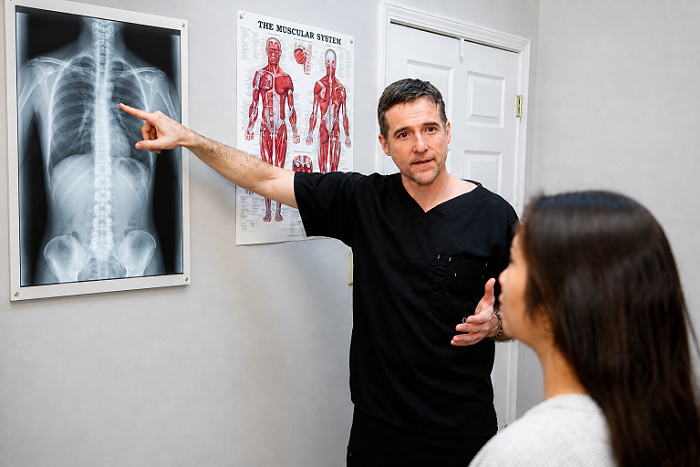
Does This Sound Like You?

Disc-related symptoms can stay in the neck or back or travel into an arm or leg. See if any of these patterns feel familiar.
More disc-related symptoms
What Is a Disc Injury?
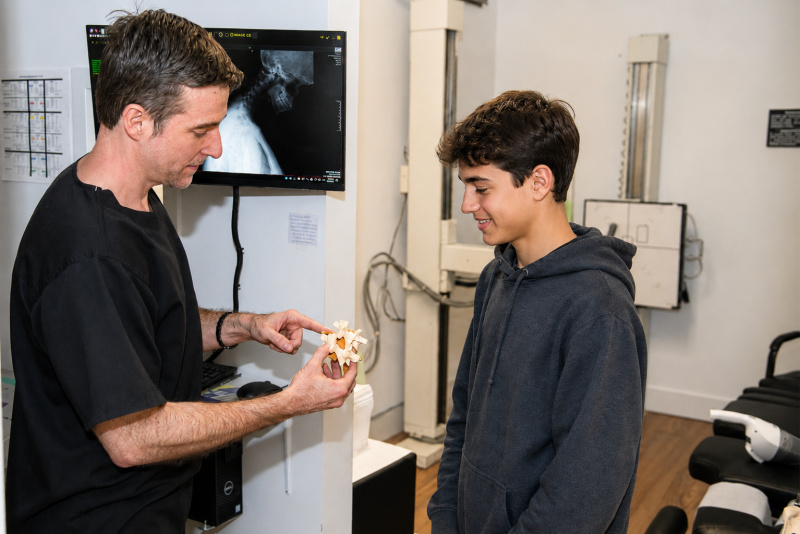
Spinal discs sit between the bones of the spine and help absorb load while allowing movement. A disc may become irritated, bulge, protrude, or herniate; in some cases, disc material extends farther as an extrusion.
Some disc problems cause mostly local neck or back pain. Others may irritate a nearby nerve root and contribute to radiating pain, numbness, tingling, or weakness. Not every disc finding causes symptoms, so the symptom pattern and examination matter.
Bulge, Protrusion, Extrusion—What Do Those Words Mean?
These imaging terms describe the shape and extent of disc material. They help describe what an MRI shows, but they do not by themselves determine whether the disc is the source of pain.
Disc Bulge
A broader extension of the disc contour beyond its usual margin.
Disc Protrusion
A more focal herniation in which the base of the displaced disc material remains wider than the outward extension.
Disc Extrusion
A herniation in which disc material extends farther beyond the disc space and may have a narrower connection to the disc.
A separation in fibers of the disc’s outer ring. Its significance depends on the full clinical picture.
What Can Contribute to Disc Pain or Nerve Symptoms?
Disc-related symptoms can develop for different reasons, and similar symptoms may also come from structures other than a disc.
Cervical Disc Herniation
A cervical disc protrusion or extrusion may irritate or compress a nerve root and contribute to neck pain, radiating arm pain, numbness, tingling, weakness, or cervical radiculopathy.
Lumbar Disc Herniation
A lumbar disc protrusion or extrusion may affect a nearby nerve root and contribute to back pain, sciatica, radiating leg pain, sensory changes, weakness, or lumbar radiculopathy.
Nerve-Root Irritation or Compression
When a disc or another structure affects a spinal nerve root, symptoms may follow a radicular pattern into an arm or leg.
Acute Injury
Lifting, twisting, sports activity, falls, or auto accidents may irritate a disc or aggravate a previously quiet disc abnormality.
Repetitive Loading & Posture
Repeated bending, lifting, prolonged sitting, driving, or occupational activity may aggravate a sensitive cervical or lumbar region.
Other Musculoskeletal or Medical Causes
Joint irritation, muscle strain, spinal stenosis, peripheral nerve problems, or other medical conditions can produce symptoms that overlap with disc-related pain.
How Dr. Collin Evaluates Disc-Related Symptoms
The goal is to understand the symptom pattern before deciding whether chiropractic care, imaging, referral, or another approach makes sense.
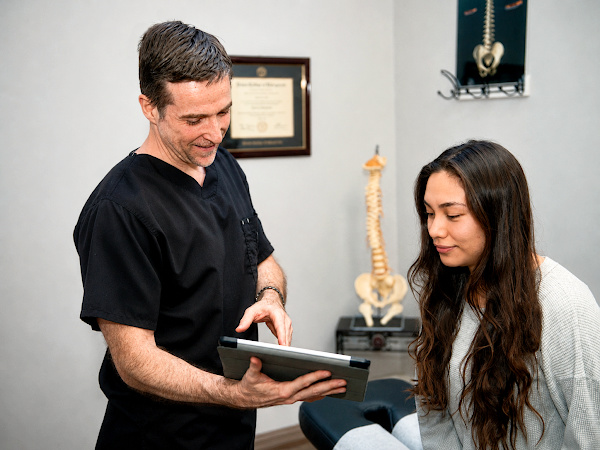
What the evaluation may include
Our Approach to Disc Injuries & Herniated Disc Symptoms
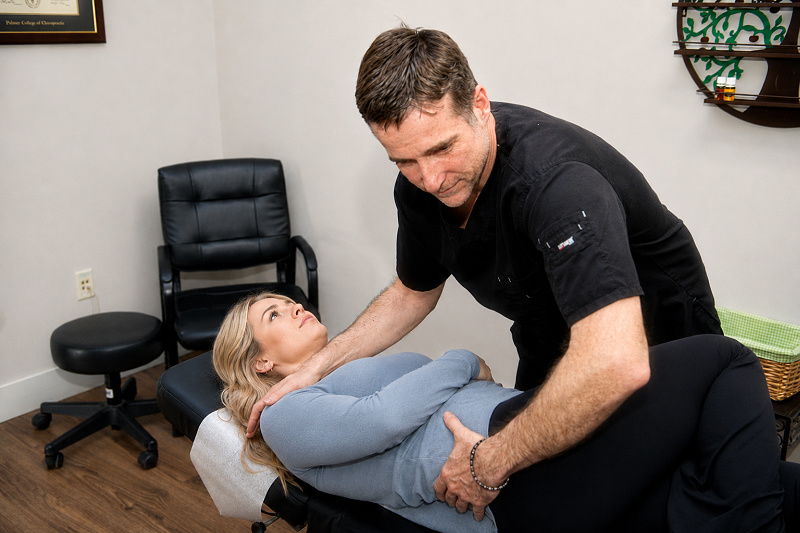
Chiropractic adjustments may be one part of care when appropriate for the individual findings.
Chiropractic care is not automatically appropriate simply because an MRI shows a disc bulge or herniation. Care depends on the history, examination, neurological findings, symptom severity, and whether there are reasons to refer for additional evaluation.
More about our approach
When conservative chiropractic care is appropriate, the plan may include adjustments, soft-tissue care, posture guidance, activity modification, home exercises, or supportive therapies. Progressive weakness, significant sensory loss, severe nerve-root compression, spinal cord involvement, or other concerning findings may require MRI, orthopedic, neurology, pain-management, or other medical evaluation.

What to Do While You’re Monitoring Disc Symptoms
Notice Where Pain Travels
Make note of whether pain stays in the neck or back or travels into an arm, hand, hip, leg, foot, or toes. Also note numbness, tingling, or weakness.
Avoid Repeatedly Aggravating Movements
If repeated lifting, bending, twisting, or prolonged sitting clearly increases symptoms, reduce or modify that activity until the problem is better understood.
Bring Any Prior Imaging or Reports
If you already have X-rays, an MRI report, or records from another provider, bring them to your visit so Dr. Collin can review them along with your current symptoms and examination.
When Disc Symptoms May Need Urgent Medical Attention
Seek urgent or emergency medical evaluation for new bowel or bladder dysfunction, numbness in the groin or saddle area, severe or rapidly worsening weakness, difficulty walking, or significant neurological symptoms after a serious injury.
Related Conditions We Treat
Disc-related symptoms may overlap with neck pain, back pain, sciatica, numbness and tingling, whiplash, or auto accident injuries.
Looking for a broader overview? View Chiropractic Services · Personal Injury Care
Disc Injury & Herniated Disc FAQ
Can a chiropractor help with a herniated disc?
Chiropractic care may be appropriate in some cases, depending on the history, examination findings, neurological status, symptoms, and overall health. Dr. Collin evaluates the problem first and explains whether conservative chiropractic care, imaging, referral, or another approach makes sense.
Is a bulging disc the same as a herniated disc?
Not exactly. A bulge usually describes a broader extension of the disc contour, while herniation refers to more focal displacement of disc material. The significance depends on the location and whether the finding matches the patient’s symptoms.
What should I bring if I already have an MRI?
Bring the MRI report and, if available, the images or access information from the imaging center. Records from prior doctors, specialists, or therapists can also help Dr. Collin compare the imaging with your current symptoms and examination findings.
Do MRI disc findings always cause pain?
No. Disc bulges and herniations can sometimes be present without causing symptoms. Imaging findings need to be compared with the location of pain, neurological symptoms, examination findings, and overall clinical picture.
Can a herniated disc cause radiculopathy?
It can when a cervical or lumbar nerve root is irritated or compressed. Radicular pain may travel into an arm or leg. When nerve-root dysfunction produces neurological changes such as weakness, sensory loss, or reflex changes, clinicians may use terms such as cervical radiculopathy or lumbar radiculopathy.
Will I need X-rays or an MRI?
Not everyone needs imaging. X-rays are useful for evaluating bones and alignment but do not directly show the soft spinal disc the way MRI does. MRI or another referral may be considered when the history, neurological findings, persistent symptoms, or other concerns make additional imaging appropriate.
When should disc symptoms be treated as urgent?
Seek urgent medical care for new bowel or bladder dysfunction, saddle-area numbness, severe or rapidly worsening weakness, difficulty walking, or significant neurological symptoms after serious trauma.
Disc Finding on an MRI—or Symptoms That Won’t Settle Down?
Whether your symptoms are new, recurring, or tied to a known disc bulge or herniation, Dr. Collin will take time to listen, evaluate the pattern, and explain the next step.
Location & Contact
4965 Lanier Islands Pky,
Suite 103
Buford, Georgia 30518
Call Today: 770-361-8225



Hours
Tues: 9 am - 1 pm
Saturday: 9 am - 12 pm
Call Today: 770-361-8225

"AWESOME, AWESOME, AWESOME! A for-sure place you want to check out for all your Chiropractic and Wellness needs. Would refer time and time again."
~Ashlea
Join us on Social for announcements, deals, health tips and latest products!
 |
 |