Back Pain?
Let’s Find Out Why.
Back pain can affect your upper, mid, or lower back and make sitting, standing, sleeping, working, driving, and everyday movement much harder.
Whether your pain is in the thoracic (mid-back) or lumbar (lower-back) region, Dr. Richard Collin takes time to listen, evaluate what may be contributing, and clearly explain your options.
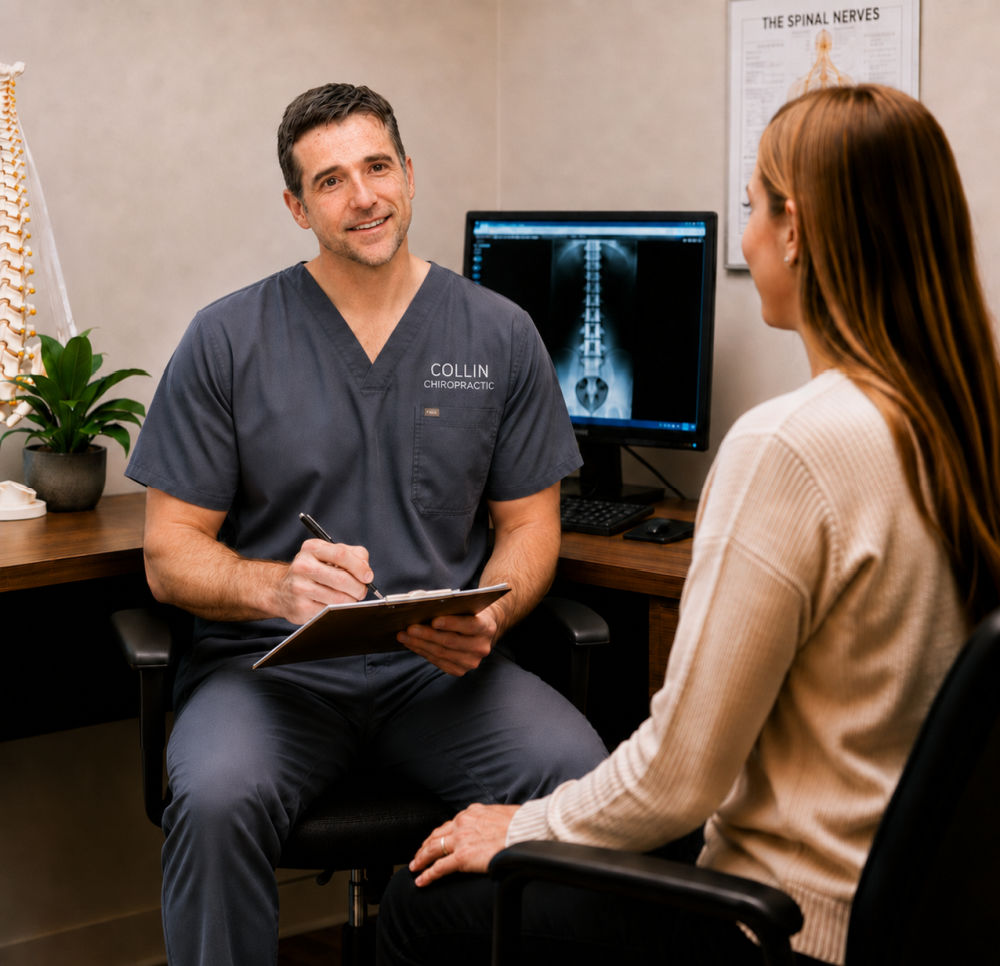
Does This Sound Like You?

Back pain can feel different depending on whether the upper, thoracic, or lumbar spine is involved. See if any of these feel familiar.
More back-pain symptoms
Need Back Pain Relief Soon?
Back pain can be frustrating when it affects sleep, work, exercise, family time, or daily routines. Same-day appointments are often available, walk-ins are welcome, and our team will do everything we can to help you get answers quickly.
Common Causes of Back Pain
Back pain may involve the thoracic spine, lumbar spine, muscles, joints, discs, or nearby nerves. Radiating or radicular symptoms can also travel from the lower back into the hip, buttock, or leg.
Muscle Strain & Spasm
Lifting, sudden movement, repetitive work, exercise, or sports can strain muscles in the upper, thoracic, or lumbar back and trigger painful spasms.
Posture & Sitting
Long hours at a desk, driving, or sitting can contribute to thoracic tightness, lumbar stiffness, and discomfort that builds throughout the day.
Sports & Golf Injuries
Golf, gym workouts, football, running, and other sports can stress the back through twisting, impact, overuse, lifting, or repetitive motion.
Radiating & Radicular Pain
Pain that radiates into the hip, buttock, thigh, calf, or foot may be related to lumbar nerve irritation, sciatica, or another nerve-related problem.
Disc Irritation
Lumbar disc bulges, protrusions, or herniations may contribute to localized back pain or nerve symptoms such as radiating pain, numbness, tingling, or weakness.
Auto Accident Injuries
Back pain after a collision may involve thoracic or lumbar soft tissues, spinal joints, muscle strain, disc-related symptoms, or nerve irritation.
How Dr. Collin Evaluates Back Pain
Great care starts with understanding where the pain is located, what makes it better or worse, and whether the thoracic spine, lumbar spine, hips, legs, discs, or nerves may be involved.
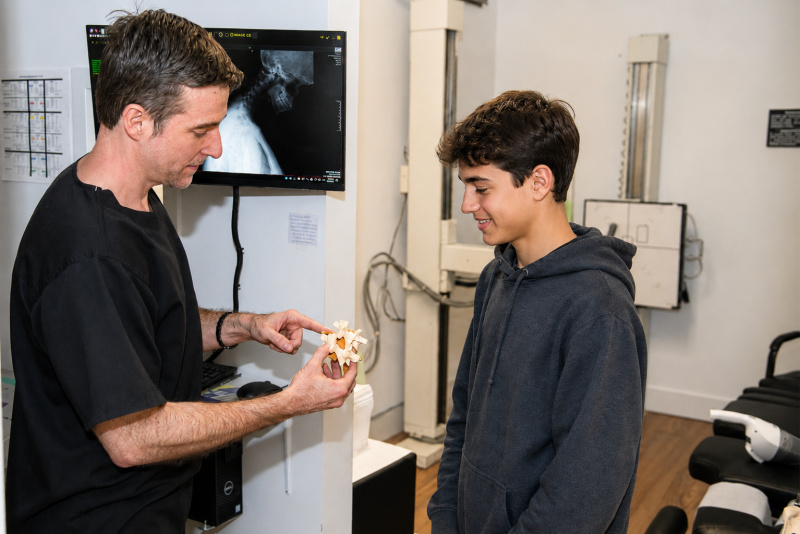
What the evaluation can include
Our Approach to Back Pain Treatment
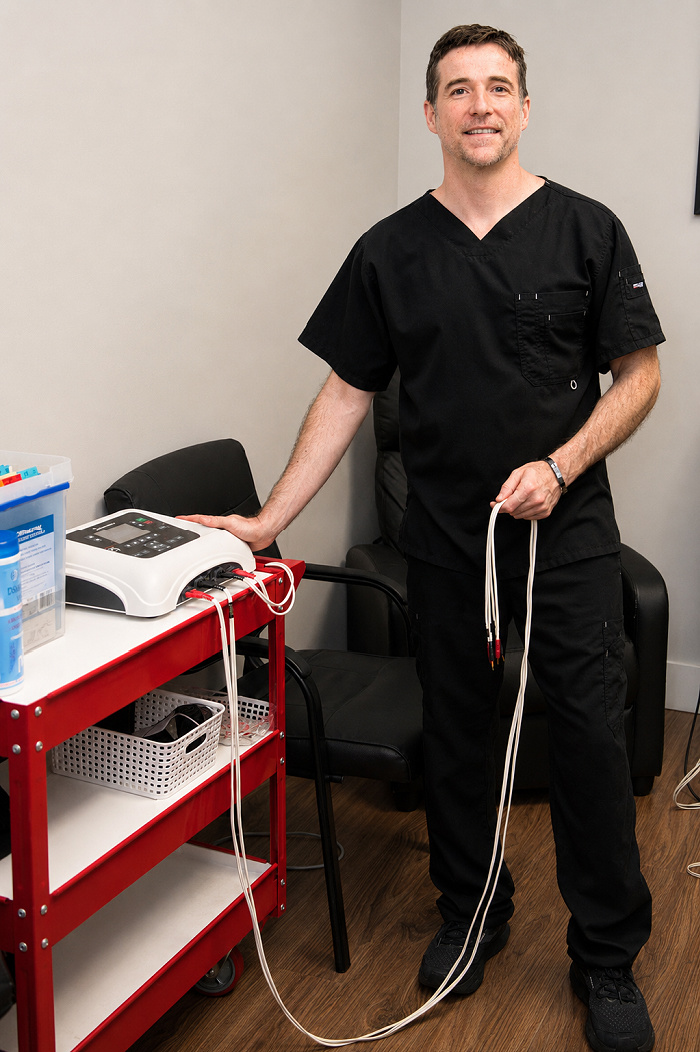
Supportive therapies such as E-Stim may be used when appropriate as part of an individualized care plan.
Every patient is different. Depending on your findings, care may include chiropractic adjustments, soft tissue work, stretching, posture guidance, home exercises, or supportive therapies such as electrical muscle stimulation when appropriate.
More about our approach
If your symptoms suggest lumbar disc involvement, radiating or radicular pain, significant nerve irritation, or another concern that needs additional evaluation, Dr. Collin can explain whether imaging, referral, or coordinated care may be appropriate. The goal is to understand what is happening, explain your options clearly, and help you choose the next step without pressure.

Home Care Tips You Can Start Today
Simple things you can do at home while your back is recovering.
✓ Keep Moving Gently
Unless you've been told otherwise, gentle movement is often better than prolonged bed rest. Short walks and comfortable movement can help reduce stiffness without forcing painful activity.
✓ Change Positions Often
If sitting, standing, or driving aggravates your back, change positions periodically rather than staying in one posture for a long stretch. A small posture or movement break can help reduce thoracic and lumbar stiffness.
✓ Lift and Twist Smarter
Keep objects close to your body, bend through your knees when appropriate, and avoid combining heavy lifting with twisting. If a movement clearly worsens your pain, stop and have the problem evaluated.
When Should Back Pain Be Checked?
Home care may make you more comfortable, but it does not replace an evaluation. Back pain that is severe, persistent, keeps returning, follows a car accident, or causes radiating pain, numbness, tingling, weakness, or other nerve symptoms deserves careful evaluation.
Helpful At-Home Back Pain Resources
Looking for safe stretches and mobility ideas? Visit our video library where Dr. Collin demonstrates simple techniques you can do at home, including how to use a foam roller for shoulder, neck, or back discomfort.
Watch Chiropractic Exercise VideosRelated Conditions We Treat
Back pain can overlap with radiating pain, disc symptoms, nerve irritation, sports injuries, and accident-related conditions.
Looking for a broader overview? View all chiropractic services or explore Personal Injury Care.
Back Pain FAQ
Can a chiropractor help with back pain?
Chiropractic care may help many types of back pain, including discomfort related to spinal joint restriction, muscle tension, posture, sports injuries, reduced mobility, or certain disc- and nerve-related symptoms. Dr. Collin will evaluate your symptoms and explain whether chiropractic care is appropriate.
What is the difference between thoracic and lumbar back pain?
Thoracic back pain involves the mid-back region, while lumbar pain involves the lower back. Symptoms can overlap, and some patients have discomfort across more than one spinal region. The location of the pain, how it behaves, and whether it radiates can help guide the evaluation.
Can back pain radiate into the hip or leg?
Yes. Pain that radiates from the lumbar region into the hip, buttock, thigh, calf, or foot may suggest sciatica, nerve irritation, or other radicular symptoms that deserve evaluation.
Do I need X-rays or other imaging for back pain?
Not every patient needs imaging. If your symptoms, injury history, neurological findings, or examination suggest that X-rays or other imaging may be helpful, Dr. Collin will explain why before moving forward.
Is back pain after a car accident serious?
It can be. Back pain after a collision may involve muscle or ligament strain, thoracic or lumbar joint irritation, disc-related symptoms, or nerve irritation. Because symptoms can develop or worsen after the crash, prompt evaluation can be important.
When should I seek emergency medical care?
Seek emergency medical care immediately if back pain follows serious trauma or is accompanied by loss of bowel or bladder control, numbness in the groin or saddle area, significant or rapidly worsening weakness, chest pain, difficulty breathing, fever with severe illness, or loss of consciousness.
Not Sure Where to Start With Back Pain?
Whether the pain is upper, thoracic, lumbar, radiating, or difficult to describe, you do not have to diagnose yourself before you call. Schedule an evaluation, review our new-patient information, or call the office and we'll help you figure out the next step.
Location & Contact
4965 Lanier Islands Pky,
Suite 103
Buford, Georgia 30518
Call Today: 770-361-8225



Hours
Tues: 9 am - 1 pm
Saturday: 9 am - 12 pm
Call Today: 770-361-8225

"AWESOME, AWESOME, AWESOME! A for-sure place you want to check out for all your Chiropractic and Wellness needs. Would refer time and time again."
~Ashlea
Join us on Social for announcements, deals, health tips and latest products!
 |
 |