Shoulder, Knee, Hip
or Joint Pain?
A painful shoulder, knee, hip, wrist, hand, ankle, or foot can make work, stairs, driving, gripping, sleep, hobbies, and everyday movement frustrating.
Dr. Richard Collin evaluates joint and extremity complaints in Buford, GA and explains the appropriate next step.
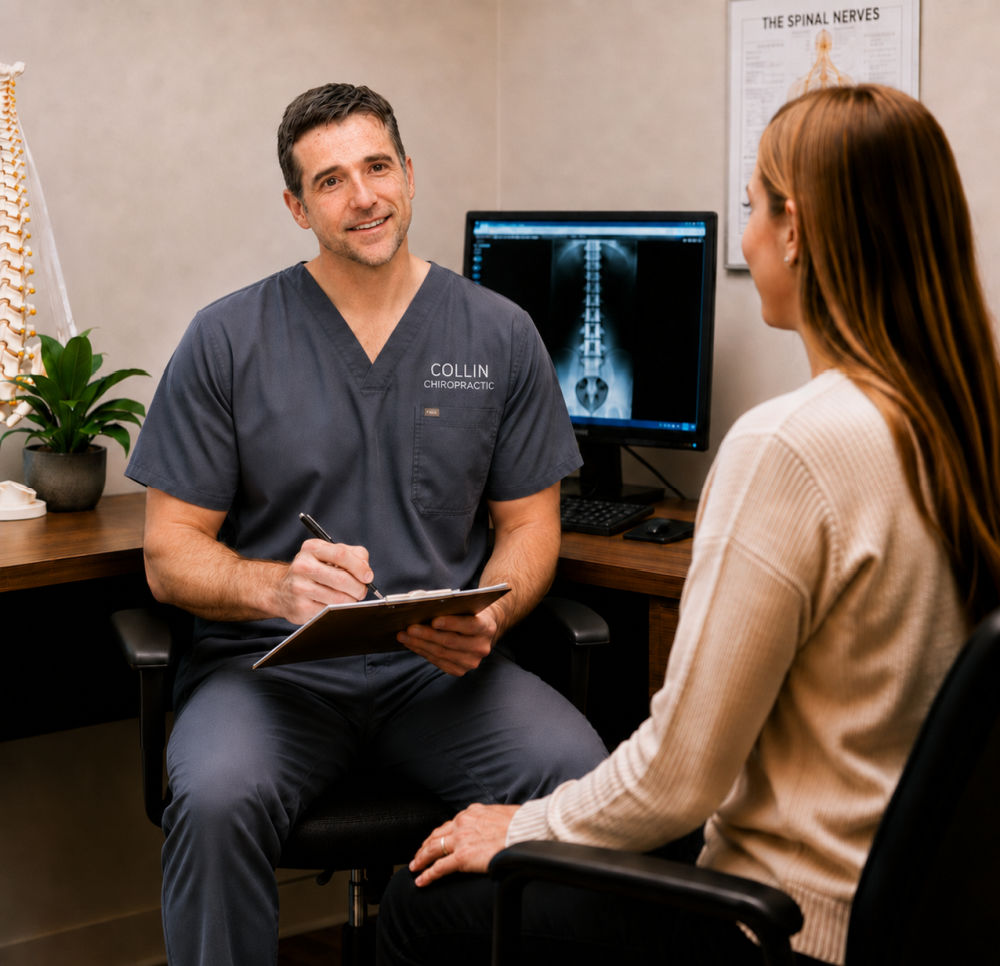
Does This Sound Like You?

Joint problems often show up during ordinary movement before they have a clear diagnosis.
More joint and extremity symptoms
Where Does It Hurt?
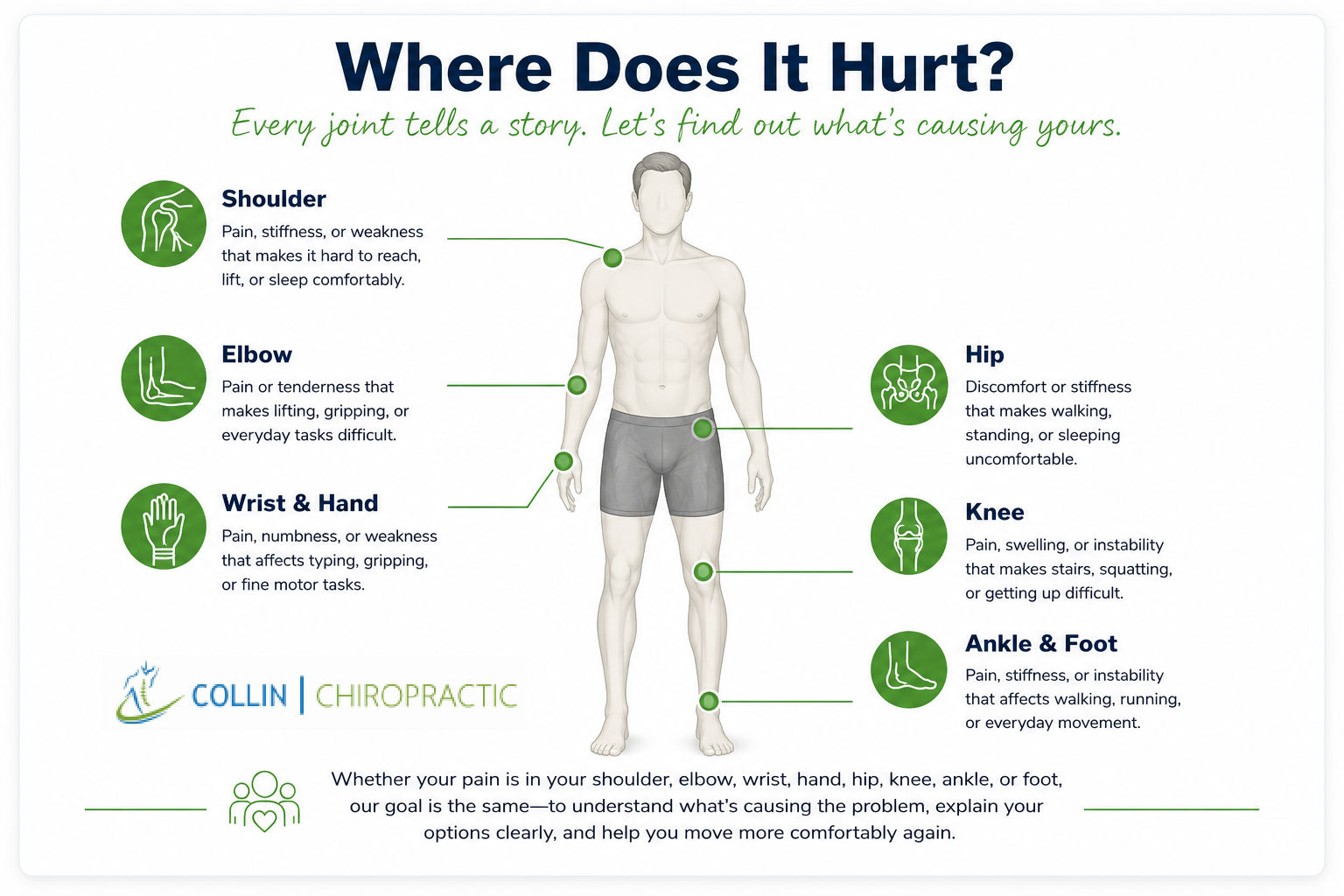
You do not need to know the diagnosis before you call. The symptom pattern and examination help guide the next step.
What Can Contribute to Joint & Extremity Pain?
Similar pain can come from different structures, so the pattern matters more than the label.
Sports & Activity Injuries
Sports, lifting, workouts, and repetitive activity may strain joints or surrounding soft tissues.
Repetitive Use
Typing, gripping, tool use, and repeated movement can aggravate a joint or nearby soft tissue.
Sprains, Strains & Falls
A fall, awkward step, sudden twist, or old injury may leave a joint painful, stiff, weak, or unstable.
Restricted Joint Motion
Reduced motion can change how a joint and the surrounding muscles work during normal activity.
Compensation & Referred Pain
Pain may change how you move, while neck, back, or nerve problems can sometimes mimic an extremity complaint.
Arthritic, Medical or Other Causes
Degenerative changes, inflammatory conditions, fracture, infection, vascular problems, or other medical causes may require imaging or medical evaluation rather than chiropractic care.
How Dr. Collin Evaluates Joint Pain
The first step is understanding which movements hurt, how the problem began, and whether another area may be involved.

What the evaluation may include
Our Approach to Joint & Extremity Pain
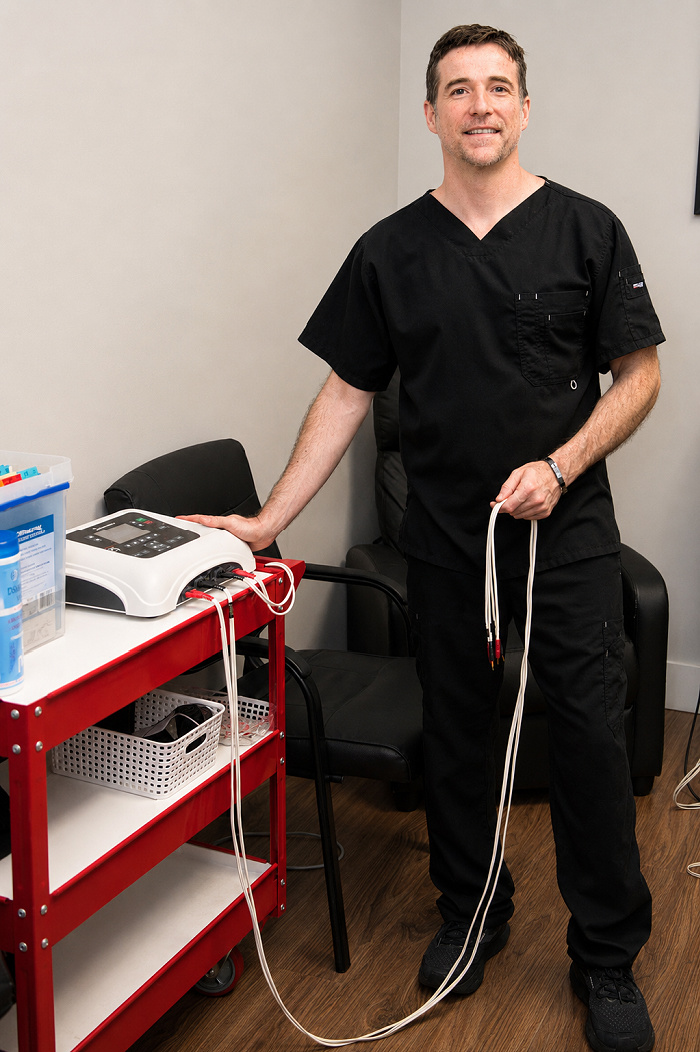
Supportive therapies such as electrical stimulation may be used when appropriate as part of an individualized care plan.
Dr. Collin especially enjoys working with joints outside the spine—including shoulders, elbows, wrists, hands, hips, knees, ankles, and feet. This is often described simply as extremity adjusting.
More about our approach
When appropriate, care may include joint-specific adjustments, soft-tissue work, mobility guidance, home exercises, or supportive therapies. Fractures, significant tears, infection, severe instability, or other concerning findings may require imaging or referral instead.

What to Notice Before Your Visit
Don’t Push Through Sharp Pain
If a movement causes sharp, worsening, or unusual pain, stop rather than repeatedly forcing it.
Notice Swelling, Weakness or Instability
Changes in swelling, strength, balance, grip, or joint stability are useful details to mention during an evaluation.
Track the Movement That Triggers It
Notice whether pain appears with reaching, stairs, walking, gripping, lifting, twisting, running, or another specific movement.
For simple mobility guidance, watch Dr. Collin’s exercise videos
When Joint Pain May Need Urgent Medical Attention
Seek urgent medical care after significant trauma if there is obvious deformity, inability to bear weight or use the limb, rapidly increasing swelling, loss of sensation or strength, an open wound near the joint, or a hot red swollen joint with fever.
Related Conditions & Care
Joint pain may overlap with sports injuries, frozen shoulder, nerve symptoms, back problems, or trauma.
Looking for a broader overview? View Chiropractic Services · New Patient Information
Shoulder, Knee, Hip & Joint Pain FAQ
Can a chiropractor help with joint pain?
Chiropractic care may be appropriate when findings suggest a musculoskeletal problem that fits conservative care. Other findings may require imaging or referral.
Do you work with shoulders, knees, hips, wrists, hands, ankles, and feet?
Yes. Dr. Collin evaluates complaints involving shoulders, elbows, wrists, hands, hips, knees, ankles, and feet.
What does extra-spinal manipulation mean?
It is a technical term for manipulation or adjustment of joints outside the spine. Patients may hear this described more simply as extremity adjusting or joint-specific manipulation.
Could my joint pain actually be coming from my neck or back?
Sometimes. Referred pain, nerve irritation, or compensation can mimic a local joint problem, so the evaluation may look beyond the painful area.
What if my joint pain started after an injury or car accident?
Joint pain after a fall, sports injury, work injury, or collision should be evaluated when there is swelling, weakness, instability, or loss of motion.
Will I need X-rays, an MRI, or a referral?
Not every joint complaint needs imaging. History and examination findings help determine whether X-rays, MRI, orthopedic evaluation, or another referral may be appropriate.
Do I need to know exactly what structure is injured before scheduling?
No. You do not need to know whether the problem is coming from a joint, muscle, tendon, ligament, nerve, or another structure before you call. The evaluation helps determine what may be involved and whether referral is needed.
Let’s Help You Move More Comfortably Again.
If joint pain is limiting work, exercise, sleep, or everyday movement, Dr. Collin will listen, evaluate the problem, and explain the next step.
Location & Contact
4965 Lanier Islands Pky,
Suite 103
Buford, Georgia 30518
Call Today: 770-361-8225



Hours
Tues: 9 am - 1 pm
Saturday: 9 am - 12 pm
Call Today: 770-361-8225

"AWESOME, AWESOME, AWESOME! A for-sure place you want to check out for all your Chiropractic and Wellness needs. Would refer time and time again."
~Ashlea
Join us on Social for announcements, deals, health tips and latest products!
 |
 |